
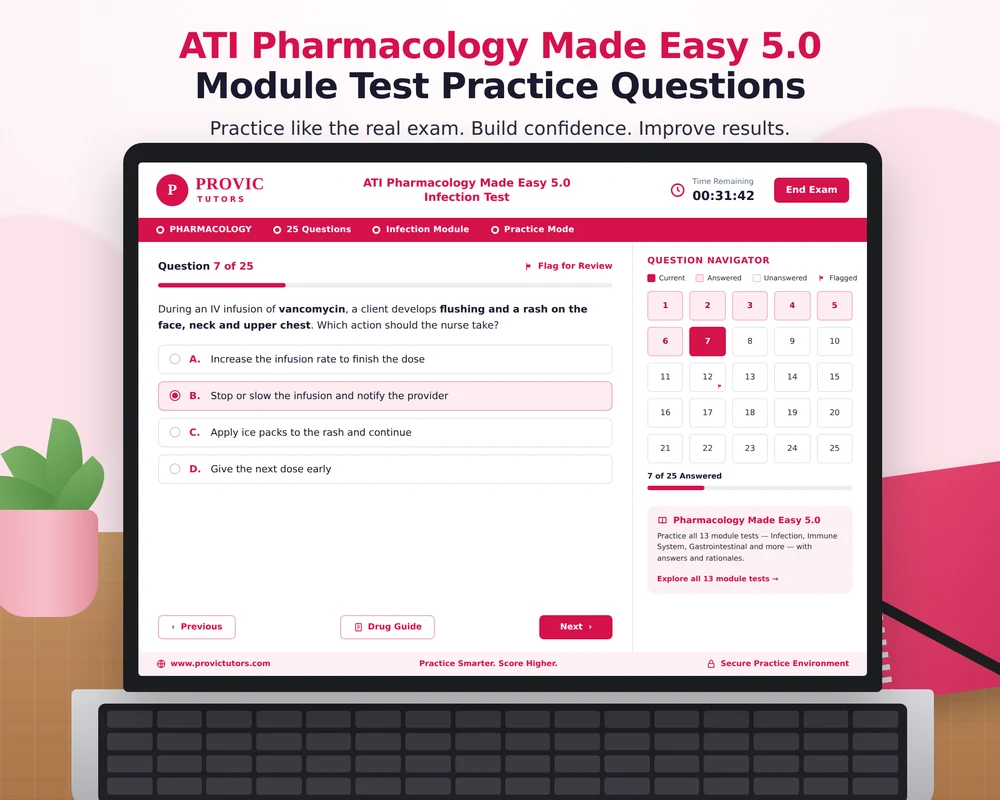
ATI Pharmacology Made Easy 5.0 is a series of 13 module tests, one after each lesson. This guide walks through every test in the series: the drug classes it covers, the prototype drugs worth knowing well, and the nursing priorities that questions return to again and again.
Each module section ends with a free 5-question preview. Answer one question at a time, see the rationale straight away, and get a readiness score at the end — then continue with the full 25-question practice test where it's available.
All 13 Pharmacology Made Easy 5.0 module tests
Tests marked Practice test available link to a full 25-question practice test with answers and rationales. Every module has a free 5-question preview on this page.
Pharmacology Made Easy 5.0Introduction to Pharmacology Test
Pharmacokinetics, pharmacodynamics, medication safety, the rights of administration and life-span considerations.
Start practicing → 02Practice test availablePharmacology Made Easy 5.0Infection Test
Antibiotics, antivirals, antifungals and antitubercular drugs.
Start practicing → 03Practice test availablePharmacology Made Easy 5.0The Cardiovascular System Test
Antihypertensives, diuretics, antianginals, antidysrhythmics, heart failure drugs and lipid-lowering agents.
Start practicing → 04Practice test availablePharmacology Made Easy 5.0The Respiratory System Test
Bronchodilators, inhaled corticosteroids, leukotriene modifiers, antihistamines and cough and cold medications.
Start practicing → 05Practice test availablePharmacology Made Easy 5.0The Gastrointestinal System Test
PPIs, H2 blockers, antacids, antiemetics, laxatives, antidiarrheals and IBD drugs.
Start practicing → 06Practice test availablePharmacology Made Easy 5.0The Endocrine System Test
Insulins and other diabetes medications, thyroid and antithyroid drugs, and adrenal and pituitary hormones.
Start practicing → 07Practice test availablePharmacology Made Easy 5.0The Neurological System (Part 1) Test
Medications for neurological disorders such as Parkinson's disease, Alzheimer's disease, seizures, myasthenia gravis and multiple sclerosis.
Start practicing → 08Practice test availablePharmacology Made Easy 5.0The Neurological System (Part 2) Test
Mental health medications: antidepressants, mood stabilizers, anxiolytics, antipsychotics and ADHD medications.
Start practicing → 09Practice test availablePharmacology Made Easy 5.0The Musculoskeletal System Test
Drugs for osteoporosis, gout, rheumatoid arthritis and muscle spasm.
Start practicing → 10Practice test availablePharmacology Made Easy 5.0Pain and Inflammation Test
NSAIDs, acetaminophen, opioid agonists and antagonists, and adjuvant pain medications.
Start practicing → 11Practice test availablePharmacology Made Easy 5.0The Hematologic System Test
Anticoagulants, antiplatelets, thrombolytics and drugs for anemia.
Start practicing → 12Practice test availablePharmacology Made Easy 5.0The Immune System Test
Vaccines, immunosuppressants, antineoplastics, monoclonal antibodies and antiretrovirals.
Start practicing → 13Practice test availablePharmacology Made Easy 5.0The Reproductive and Genitourinary System Test
Hormonal contraceptives and hormone therapy, BPH and erectile dysfunction drugs, and urinary tract medications.
Start practicing →What is ATI Pharmacology Made Easy 5.0?
Pharmacology Made Easy 5.0 is ATI's pharmacology learning program for nursing students. Instead of memorizing drugs one by one, it groups medications by body system and teaches each class through a prototype drug — the medication that represents how the whole class works, what it treats and what can go wrong.
The program is divided into 13 modules — an introduction, the major body systems (with the neurological system split into two parts), plus infection and pain and inflammation. Each module is a lesson followed by its own module test.
How the 13 tests compare
| # | Module test | Main drug classes | Prototypes to know | Safety themes |
|---|---|---|---|---|
| 1 | Pharmacology Made Easy 5.0 Introduction to Pharmacology Test | Pharmacokinetics, pharmacodynamics, medication safety, the rights of administration and life-span considerations. | Concepts rather than one drug class: half-life, first-pass effect, therapeutic index | Safe administration, drug levels, older adults and children, allergic reactions |
| 2 | Pharmacology Made Easy 5.0 Infection Test | Antibiotics, antivirals, antifungals and antitubercular drugs. | Penicillin G, cefazolin, vancomycin, gentamicin, tetracycline, ciprofloxacin, metronidazole, isoniazid, amphotericin B, acyclovir | Allergy, cultures first, peak and trough, organ toxicity, superinfection |
| 3 | Pharmacology Made Easy 5.0 The Cardiovascular System Test | Antihypertensives, diuretics, antianginals, antidysrhythmics, heart failure drugs and lipid-lowering agents. | Lisinopril, losartan, metoprolol, amlodipine, furosemide, hydrochlorothiazide, spironolactone, digoxin, nitroglycerin, atorvastatin, amiodarone | Vital signs before giving, potassium balance, hypotension, toxicity |
| 4 | Pharmacology Made Easy 5.0 The Respiratory System Test | Bronchodilators, inhaled corticosteroids, leukotriene modifiers, antihistamines and cough and cold medications. | Albuterol, salmeterol, ipratropium, tiotropium, fluticasone, montelukast, theophylline, diphenhydramine, acetylcysteine | Rescue versus controller, inhaler technique, theophylline toxicity, sedation |
| 5 | Pharmacology Made Easy 5.0 The Gastrointestinal System Test | PPIs, H2 blockers, antacids, antiemetics, laxatives, antidiarrheals and IBD drugs. | Omeprazole, famotidine, sucralfate, misoprostol, ondansetron, metoclopramide, lactulose, psyllium | Dose timing, drug interactions, QT prolongation, EPS, pregnancy |
| 6 | Pharmacology Made Easy 5.0 The Endocrine System Test | Insulins and other diabetes medications, thyroid and antithyroid drugs, and adrenal and pituitary hormones. | Insulin lispro, regular insulin, NPH insulin, insulin glargine, metformin, glipizide, levothyroxine, methimazole, prednisone, desmopressin | Hypoglycemia, insulin timing and mixing, thyroid replacement, agranulocytosis |
| 7 | Pharmacology Made Easy 5.0 The Neurological System (Part 1) Test | Medications for neurological disorders such as Parkinson's disease, Alzheimer's disease, seizures, myasthenia gravis and multiple sclerosis. | Carbidopa-levodopa, donepezil, phenytoin, carbamazepine, valproic acid, levetiracetam, pyridostigmine, interferon beta | Seizure drug levels and toxicity, never stopping antiepileptics abruptly, cholinergic effects |
| 8 | Pharmacology Made Easy 5.0 The Neurological System (Part 2) Test | Mental health medications: antidepressants, mood stabilizers, anxiolytics, antipsychotics and ADHD medications. | Sertraline, phenelzine, amitriptyline, lithium, lorazepam, buspirone, haloperidol, clozapine, olanzapine, methylphenidate | Serotonin syndrome, tyramine, lithium levels, EPS and NMS, agranulocytosis |
| 9 | Pharmacology Made Easy 5.0 The Musculoskeletal System Test | Drugs for osteoporosis, gout, rheumatoid arthritis and muscle spasm. | Alendronate, raloxifene, calcium and vitamin D, colchicine, allopurinol, methotrexate, hydroxychloroquine, etanercept, baclofen, cyclobenzaprine | Correct administration, organ toxicity, infection risk with biologics |
| 10 | Pharmacology Made Easy 5.0 Pain and Inflammation Test | NSAIDs, acetaminophen, opioid agonists and antagonists, and adjuvant pain medications. | Ibuprofen, aspirin, celecoxib, acetaminophen, morphine, hydromorphone, naloxone, gabapentin, sumatriptan | Respiratory depression, constipation, GI bleeding, liver toxicity |
| 11 | Pharmacology Made Easy 5.0 The Hematologic System Test | Anticoagulants, antiplatelets, thrombolytics and drugs for anemia. | Heparin, enoxaparin, warfarin, apixaban, clopidogrel, alteplase, ferrous sulfate, cyanocobalamin, folic acid, epoetin alfa | Bleeding, lab monitoring (aPTT, INR, platelets), antidotes, iron administration |
| 12 | Pharmacology Made Easy 5.0 The Immune System Test | Vaccines, immunosuppressants, antineoplastics, monoclonal antibodies and antiretrovirals. | MMR (live vaccine), cyclosporine, methotrexate, rituximab, filgrastim, zidovudine, prednisone | Infection risk, myelosuppression, infusion reactions, adherence |
| 13 | Pharmacology Made Easy 5.0 The Reproductive and Genitourinary System Test | Hormonal contraceptives and hormone therapy, BPH and erectile dysfunction drugs, and urinary tract medications. | Combined oral contraceptives, estrogen therapy, testosterone, tamsulosin, finasteride, sildenafil, oxybutynin, phenazopyridine, bethanechol | Clot risk, drug interactions, orthostatic hypotension, anticholinergic effects |
Drug name cheat sheet
Drug-name endings are one of the fastest ways to recognize a class on a test, even when you've never seen the specific drug.
| Ending or start | Class | Examples | Module |
|---|---|---|---|
| -pril | ACE inhibitor | lisinopril, enalapril | Cardiovascular |
| -sartan | Angiotensin II receptor blocker | losartan, valsartan | Cardiovascular |
| -olol | Beta blocker | metoprolol, propranolol | Cardiovascular |
| -dipine | Calcium channel blocker | amlodipine, nifedipine | Cardiovascular |
| -statin | HMG-CoA reductase inhibitor (statin) | atorvastatin, simvastatin | Cardiovascular |
| -terol | Beta2 agonist bronchodilator | albuterol, salmeterol | Respiratory |
| -sone / -olone | Glucocorticoid | prednisone, fluticasone, prednisolone | Endocrine / Respiratory / Immune |
| -prazole | Proton pump inhibitor | omeprazole, pantoprazole | Gastrointestinal |
| -tidine | H2 receptor antagonist | famotidine, cimetidine | Gastrointestinal |
| -setron | Serotonin (5-HT3) antagonist antiemetic | ondansetron, granisetron | Gastrointestinal |
| -gliptin | DPP-4 inhibitor (diabetes) | sitagliptin, linagliptin | Endocrine |
| -azepam / -azolam | Benzodiazepine | lorazepam, diazepam, alprazolam | Neurological (Part 2) |
| -triptan | Antimigraine (serotonin agonist) | sumatriptan, rizatriptan | Pain and Inflammation |
| -dronate | Bisphosphonate | alendronate, risedronate | Musculoskeletal |
| -parin | Heparin anticoagulant | heparin, enoxaparin | Hematologic |
| -xaban | Factor Xa inhibitor | apixaban, rivaroxaban | Hematologic |
| -mab | Monoclonal antibody | rituximab, infliximab | Immune |
| -vir | Antiviral | acyclovir, oseltamivir | Infection / Immune |
| -cillin | Penicillin | amoxicillin, ampicillin | Infection |
| cef- / ceph- | Cephalosporin | cefazolin, ceftriaxone | Infection |
| -mycin / -micin | Aminoglycoside (also some macrolides) | gentamicin, tobramycin; azithromycin | Infection |
| -cycline | Tetracycline | tetracycline, doxycycline | Infection |
| -floxacin | Fluoroquinolone | ciprofloxacin, levofloxacin | Infection |
| -afil | PDE5 inhibitor | sildenafil, tadalafil | Reproductive and Genitourinary |
| -osin | Alpha-adrenergic blocker | tamsulosin, doxazosin | Reproductive and Genitourinary / Cardiovascular |
Pharmacology Made Easy 5.0 Introduction to Pharmacology Test
Module 01 Full practice test available Take the full Pharmacology Made Easy 5.0 Introduction to Pharmacology Test →
Pharmacology Made Easy 5.0 Introduction to Pharmacology Test sets up the rules every later module uses: how the body handles a drug, how a drug acts on the body, and how nurses give medications safely. Expect fewer drug names and more concepts applied to client scenarios.
What the Pharmacology Made Easy 5.0 Introduction to Pharmacology Test covers
| Drug class | Examples | Nursing priorities |
|---|---|---|
| Pharmacokinetics | Absorption, distribution, metabolism, excretion; first-pass effect; half-life | Know why route matters (sublingual and IV bypass first-pass); impaired liver or kidney function slows clearance and raises toxicity risk |
| Pharmacodynamics | Agonists, antagonists, therapeutic index | Narrow therapeutic index drugs (digoxin, lithium, phenytoin, warfarin) need close level monitoring |
| Medication safety | Rights of administration, high-alert medications, error prevention | Two identifiers, independent double checks for high-alert drugs, report errors |
| Adverse reactions | Side effects, adverse effects, allergy, anaphylaxis | Anaphylaxis: stop the drug, epinephrine IM first, support airway |
| Life span | Pediatrics, pregnancy and lactation, older adults | Weight-based dosing in children; older adults have reduced renal and hepatic function and higher fall risk |
Free Pharmacology Made Easy 5.0 Introduction to Pharmacology Test practice questions
Try 5 free Pharmacology Made Easy 5.0 Introduction to Pharmacology Test questions. Pick an answer to see the rationale, move between questions with the numbers, and get your readiness score at the end.
A nurse is caring for clients receiving several medications. Which medication requires the closest monitoring of serum drug levels because of its narrow therapeutic index?
Lithium has a narrow therapeutic index, meaning the difference between a therapeutic and a toxic level is small. Serum levels are monitored regularly. Digoxin, phenytoin and warfarin are other common examples.
Why is nitroglycerin given sublingually for acute angina?
Oral nitroglycerin is largely broken down by the liver before reaching the circulation. The sublingual route delivers the drug directly into the bloodstream, so it works within minutes.
A client receives 100 mg of a medication with a half-life of 4 hours at 0800. How much of the drug remains in the body at 1600?
From 0800 to 1600 is 8 hours, or two half-lives: 100 mg becomes 50 mg at 1200, then 25 mg at 1600.
Which age-related change places an older adult at increased risk for drug toxicity?
Reduced glomerular filtration slows excretion, so drugs and active metabolites can accumulate. Older adults also tend to have less body water and reduced liver blood flow.
Minutes after the first dose of IV penicillin, a client develops wheezing, hives and hypotension. After stopping the infusion, which medication should the nurse expect to give first?
Epinephrine is the first-line treatment for anaphylaxis because it reverses bronchoconstriction and hypotension. Antihistamines and glucocorticoids are added afterward but do not replace epinephrine.
Pharmacology Made Easy 5.0 Infection Test
Module 02 Full practice test available Take the full Pharmacology Made Easy 5.0 Infection Test →
Pharmacology Made Easy 5.0 Infection Test covers the largest group of drugs in the series. The good news is that the same few safety questions apply to almost every anti-infective: Is the client allergic? Were cultures taken first? Which organ can this drug damage? What superinfection might follow?
What the Pharmacology Made Easy 5.0 Infection Test covers
| Drug class | Examples | Nursing priorities |
|---|---|---|
| Penicillins | penicillin G, amoxicillin | Ask about allergy; watch for anaphylaxis, especially after IM injection |
| Cephalosporins | cefazolin, ceftriaxone | Possible cross-sensitivity with penicillin allergy; C. difficile risk |
| Vancomycin | vancomycin | Infuse over at least 60 min to prevent infusion reaction; trough levels; kidney function and hearing |
| Aminoglycosides | gentamicin, tobramycin | Nephrotoxicity and ototoxicity; peak and trough levels; monitor creatinine and hearing |
| Tetracyclines | tetracycline, doxycycline | Avoid in children under 8 and in pregnancy (tooth staining); separate from dairy, antacids and iron; sun protection |
| Macrolides | azithromycin, erythromycin | QT prolongation; GI upset |
| Fluoroquinolones | ciprofloxacin, levofloxacin | Tendon rupture; separate from antacids, iron and calcium; photosensitivity |
| Sulfonamides | trimethoprim-sulfamethoxazole | Increase fluids; watch for rash, including Stevens-Johnson syndrome; photosensitivity |
| Metronidazole | metronidazole | No alcohol during and for 3 days after (disulfiram-like reaction); metallic taste |
| Antitubercular drugs | isoniazid, rifampin, ethambutol, pyrazinamide | Isoniazid: liver toxicity and neuropathy (give vitamin B6). Rifampin: orange-red body fluids, reduces oral contraceptive effect. Ethambutol: vision changes. Long-term adherence |
| Antifungals | amphotericin B, fluconazole | Amphotericin B: infusion reactions (premedicate), nephrotoxicity, low potassium |
| Antivirals | acyclovir, oseltamivir | Acyclovir: hydrate to protect the kidneys. Oseltamivir: start within 48 hours of flu symptoms |
Free Pharmacology Made Easy 5.0 Infection Test practice questions
Try 5 free Pharmacology Made Easy 5.0 Infection Test questions. Pick an answer to see the rationale, move between questions with the numbers, and get your readiness score at the end.
A client with suspected sepsis has orders for blood cultures and IV ceftriaxone. Which action should the nurse take first?
Cultures are collected before the first antibiotic dose so the results reflect the actual organism. The antibiotic is then started promptly.
During a vancomycin infusion, a client develops flushing and a rash on the face, neck and upper chest. What should the nurse do?
This is vancomycin infusion reaction (red man syndrome), linked to infusing too quickly. The infusion is stopped or slowed, and the drug is given over at least 60 minutes.
A client is receiving gentamicin. Which finding should the nurse report to the provider?
Aminoglycosides are ototoxic and nephrotoxic. Tinnitus, hearing loss, dizziness or a rising creatinine or BUN must be reported promptly.
When should the nurse draw a trough level for a client receiving IV vancomycin?
A trough is the lowest blood level and is drawn just before the next dose. A peak is drawn shortly after the infusion is finished.
For which client should the nurse question a prescription for tetracycline?
Tetracyclines can permanently stain developing teeth and are generally avoided in children under 8 and during pregnancy. Clients should also separate them from dairy, antacids and iron, and protect themselves from the sun.
Preview complete!
You scored 0 out of 5 · 00:00
Pharmacology Made Easy 5.0 The Cardiovascular System Test
Module 03 Full practice test available Take the full Pharmacology Made Easy 5.0 The Cardiovascular System Test →
Pharmacology Made Easy 5.0 The Cardiovascular System Test is built around one habit: check the client before you give the drug. Blood pressure, apical pulse and potassium decide whether many of these medications are given or held, and most questions test exactly that judgment.
What the Pharmacology Made Easy 5.0 The Cardiovascular System Test covers
| Drug class | Examples | Nursing priorities |
|---|---|---|
| ACE inhibitors (-pril) | lisinopril, enalapril | Dry cough, angioedema (stop and report), hyperkalemia, first-dose hypotension; avoid in pregnancy |
| ARBs (-sartan) | losartan, valsartan | Similar to ACE inhibitors without the cough; hyperkalemia; avoid in pregnancy |
| Beta blockers (-olol) | metoprolol, propranolol | Check apical pulse and BP; hold for bradycardia; nonselective drugs can cause bronchospasm; may mask hypoglycemia; do not stop abruptly |
| Calcium channel blockers | amlodipine, diltiazem, verapamil | Hypotension, bradycardia (diltiazem, verapamil), peripheral edema; avoid grapefruit juice |
| Loop and thiazide diuretics | furosemide, hydrochlorothiazide | Hypokalemia, dehydration, orthostatic hypotension; furosemide can be ototoxic; give early in the day |
| Potassium-sparing diuretics | spironolactone | Hyperkalemia; avoid potassium supplements and salt substitutes |
| Cardiac glycoside | digoxin | Apical pulse for 1 full minute; hold if below 60 (adults) and notify; toxicity: nausea, vomiting, visual changes; hypokalemia increases toxicity |
| Nitrates | nitroglycerin | Sublingual every 5 min up to 3 doses; call 911 if pain is not relieved 5 min after the first dose; headache; never with PDE5 inhibitors |
| Statins (-statin) | atorvastatin, simvastatin | Report unexplained muscle pain (rhabdomyolysis); liver function tests |
| Antidysrhythmics | amiodarone | Pulmonary toxicity, thyroid and liver effects; cardiac monitoring |
Free Pharmacology Made Easy 5.0 The Cardiovascular System Test practice questions
Try 5 free Pharmacology Made Easy 5.0 The Cardiovascular System Test questions. Pick an answer to see the rationale, move between questions with the numbers, and get your readiness score at the end.
A client taking lisinopril calls the clinic. Which symptom requires immediate attention?
Swelling of the lips, tongue or face indicates angioedema, which can obstruct the airway. The client needs emergency care and the drug is stopped. A dry cough is common but not an emergency.
Before administering digoxin, the nurse finds an apical pulse of 52/min. What should the nurse do?
Digoxin slows the heart rate. For adults, it is usually held when the apical pulse is below 60/min and the provider is notified.
A client is receiving furosemide. Which laboratory value is most important for the nurse to monitor?
Loop diuretics cause significant potassium loss. Hypokalemia can cause dysrhythmias and increases the risk of digoxin toxicity.
A client with chest pain takes one sublingual nitroglycerin tablet. The pain is unchanged after 5 minutes. What should the client do?
If chest pain is not relieved 5 minutes after the first dose, the client calls emergency services. A second dose may be taken while waiting, up to 3 doses 5 minutes apart.
A client starting atorvastatin should be taught to report which symptom?
Statins can cause myopathy and, rarely, rhabdomyolysis. Unexplained muscle pain, tenderness or weakness — especially with dark urine — must be reported.
Pharmacology Made Easy 5.0 The Respiratory System Test
Module 04 Full practice test available Take the full Pharmacology Made Easy 5.0 The Respiratory System Test →
Pharmacology Made Easy 5.0 The Respiratory System Test hinges on telling rescue medications from controller medications. Know which drug opens the airways right now, which prevents attacks over time, and how to use inhalers in the right order.
What the Pharmacology Made Easy 5.0 The Respiratory System Test covers
| Drug class | Examples | Nursing priorities |
|---|---|---|
| Short-acting beta2 agonists | albuterol | Rescue inhaler for acute bronchospasm; tachycardia, tremor, nervousness |
| Long-acting beta2 agonists | salmeterol, formoterol | Controller only — never for an acute attack; used with an inhaled corticosteroid in asthma |
| Anticholinergics | ipratropium, tiotropium | Dry mouth; mainly for COPD; tiotropium is once daily |
| Inhaled corticosteroids | fluticasone, budesonide | Long-term control; rinse mouth after use to prevent oral candidiasis |
| Leukotriene modifiers | montelukast | Prevention, not rescue; take in the evening; report mood or behavior changes |
| Methylxanthines | theophylline | Narrow therapeutic range; toxicity causes tachycardia, restlessness and seizures; limit caffeine |
| Antihistamines | diphenhydramine, loratadine | First-generation drugs cause sedation and anticholinergic effects; caution in older adults |
| Cough, cold and mucolytics | dextromethorphan, guaifenesin, acetylcysteine | Decongestants raise BP; acetylcysteine loosens mucus and is also the antidote for acetaminophen overdose |
Free Pharmacology Made Easy 5.0 The Respiratory System Test practice questions
Try 5 free Pharmacology Made Easy 5.0 The Respiratory System Test questions. Pick an answer to see the rationale, move between questions with the numbers, and get your readiness score at the end.
A client is prescribed albuterol and fluticasone inhalers at the same time of day. Which instruction should the nurse give?
The bronchodilator opens the airways so the corticosteroid can reach the lower airways. Albuterol is the rescue drug; fluticasone is a daily controller.
Which instruction helps prevent a common adverse effect of inhaled fluticasone?
Inhaled corticosteroids can cause oral candidiasis (thrush) and hoarseness. Rinsing and spitting after each use reduces the risk.
A client with asthma says, "I use my salmeterol inhaler when I start wheezing." What is the nurse's best response?
Salmeterol is long-acting with a slow onset and is used only as a scheduled controller. Acute symptoms are treated with a short-acting beta2 agonist such as albuterol.
A client taking theophylline should be taught to limit which item?
Caffeine is a methylxanthine like theophylline and adds to its stimulant effects, increasing the risk of toxicity such as tachycardia, restlessness and insomnia.
A parent asks what to watch for after their child starts montelukast. Which response is correct?
Montelukast carries a warning for neuropsychiatric effects, including agitation, sleep disturbances, depression and suicidal thoughts. It prevents symptoms and is not used for acute attacks.
Pharmacology Made Easy 5.0 The Gastrointestinal System Test
Module 05 Full practice test available Take the full Pharmacology Made Easy 5.0 The Gastrointestinal System Test →
Pharmacology Made Easy 5.0 The Gastrointestinal System Test is all about timing and interactions. Many GI drugs only work when they're taken at the right time relative to meals, and several of them change how other medications are absorbed.
What the Pharmacology Made Easy 5.0 The Gastrointestinal System Test covers
| Drug class | Examples | Nursing priorities |
|---|---|---|
| Proton pump inhibitors | omeprazole, pantoprazole | Take 30–60 min before breakfast; long-term use raises the risk of fractures, low magnesium, B12 deficiency and C. difficile |
| H2 receptor antagonists | famotidine, cimetidine | Cimetidine has many drug interactions; confusion can occur in older adults |
| Antacids | aluminum hydroxide, magnesium hydroxide, calcium carbonate | Separate from other drugs by 1–2 hours; aluminum causes constipation and magnesium causes diarrhea; caution with magnesium in kidney disease |
| Mucosal protectants and prostaglandins | sucralfate, misoprostol | Sucralfate on an empty stomach, away from other drugs; misoprostol is contraindicated in pregnancy |
| Antiemetics | ondansetron, metoclopramide, promethazine | Ondansetron: QT prolongation. Metoclopramide: EPS and tardive dyskinesia. Promethazine: sedation, severe tissue injury if IV infiltrates, not for children under 2 |
| Laxatives | psyllium, docusate, bisacodyl, lactulose | Bulk-forming with a full glass of fluid; lactulose goal of 2–3 soft stools a day in hepatic encephalopathy |
| Antidiarrheals | loperamide, diphenoxylate with atropine | Not for diarrhea caused by C. difficile or other infections; anticholinergic effects with diphenoxylate-atropine |
| IBD drugs | sulfasalazine, infliximab | Sulfasalazine: check for sulfa allergy, may turn urine orange-yellow, fluids; infliximab: TB screening |
Free Pharmacology Made Easy 5.0 The Gastrointestinal System Test practice questions
Try 5 free Pharmacology Made Easy 5.0 The Gastrointestinal System Test questions. Pick an answer to see the rationale, move between questions with the numbers, and get your readiness score at the end.
When should the nurse instruct a client to take omeprazole?
PPIs ("-prazole") work best when taken 30 to 60 minutes before the first meal of the day, when the proton pumps are activated by food.
A client has taken a proton pump inhibitor daily for several years. Which risk should the nurse discuss?
Long-term PPI use is associated with osteoporosis-related fractures, hypomagnesemia, vitamin B12 deficiency and an increased risk of C. difficile infection and pneumonia.
A client is prescribed sucralfate and digoxin. Which instruction should the nurse give?
Sucralfate forms a protective barrier over ulcers and works best on an empty stomach. It can bind other drugs, such as digoxin, and reduce their absorption, so they are separated by about 2 hours.
For which client should the nurse question a prescription for misoprostol?
Misoprostol, a prostaglandin used to prevent NSAID-induced ulcers, can cause uterine contractions and miscarriage. It is contraindicated in pregnancy, and clients of childbearing age need reliable contraception.
A client is taking metoclopramide. Which adverse effect should the client report immediately?
Metoclopramide blocks dopamine and can cause extrapyramidal symptoms and tardive dyskinesia, which may be irreversible. The drug should be stopped and the provider notified.
Preview complete!
You scored 0 out of 5 · 00:00
Pharmacology Made Easy 5.0 The Endocrine System Test
Module 06 Full practice test available Take the full Pharmacology Made Easy 5.0 The Endocrine System Test →
Pharmacology Made Easy 5.0 The Endocrine System Test leans heavily on diabetes medications — especially insulin types, timing and mixing — and on thyroid replacement and suppression. Hypoglycemia recognition and treatment appear again and again.
What the Pharmacology Made Easy 5.0 The Endocrine System Test covers
| Drug class | Examples | Nursing priorities |
|---|---|---|
| Rapid-acting insulin | lispro, aspart | Give within about 15 min of a meal; highest hypoglycemia risk soon after injection |
| Short-acting insulin | regular insulin | Give about 30 min before meals; the insulin used for IV infusions |
| Intermediate-acting insulin | NPH | Cloudy; roll gently; when mixing with regular, draw up clear (regular) before cloudy (NPH) |
| Long-acting insulin | glargine, detemir | Basal insulin with no pronounced peak; do not mix with other insulins |
| Biguanides | metformin | GI upset; risk of lactic acidosis; usually held before and for 48 hours after iodinated contrast, restarted once renal function is confirmed |
| Sulfonylureas | glipizide, glyburide | Hypoglycemia, especially in older adults or with skipped meals |
| Thyroid hormone | levothyroxine | Take in the morning on an empty stomach 30–60 min before breakfast; lifelong; tachycardia, insomnia and weight loss suggest too high a dose |
| Antithyroid drugs | methimazole, propylthiouracil | Agranulocytosis: report sore throat or fever; PTU can be hepatotoxic |
| Glucocorticoids | prednisone, hydrocortisone | Hyperglycemia, infection risk, fluid retention; taper rather than stop abruptly |
| Pituitary hormones | desmopressin | Water retention and hyponatremia; monitor weight, sodium and intake and output |
Free Pharmacology Made Easy 5.0 The Endocrine System Test practice questions
Try 5 free Pharmacology Made Easy 5.0 The Endocrine System Test questions. Pick an answer to see the rationale, move between questions with the numbers, and get your readiness score at the end.
A nurse is preparing regular insulin and NPH insulin in the same syringe. Which action is correct?
Clear (regular) is drawn before cloudy (NPH) so the regular vial is not contaminated with NPH. NPH is rolled gently, not shaken.
Which statement about insulin glargine is correct?
Insulin glargine is a long-acting basal insulin with no pronounced peak. It is not mixed with other insulins in the same syringe.
A client who takes metformin is scheduled for a CT scan with iodinated contrast. What should the nurse anticipate?
Iodinated contrast can impair kidney function, which raises the risk of metformin-associated lactic acidosis. Metformin is usually held and restarted about 48 hours after the procedure once renal function is acceptable.
How should the nurse teach a client to take levothyroxine?
Levothyroxine is best absorbed on an empty stomach. It is taken at the same time daily for life, separated from calcium, iron and antacids.
A client taking methimazole should report which symptom immediately?
Methimazole can cause agranulocytosis. A sore throat, fever or other signs of infection require a prompt CBC.
Pharmacology Made Easy 5.0 The Neurological System (Part 1) Test
Module 07 Full practice test available Take the full Pharmacology Made Easy 5.0 The Neurological System (Part 1) Test →
Pharmacology Made Easy 5.0 The Neurological System (Part 1) Test focuses on medications for chronic neurological disorders. Many have narrow therapeutic ranges or serious organ toxicities, and several must never be stopped suddenly.
What the Pharmacology Made Easy 5.0 The Neurological System (Part 1) Test covers
| Drug class | Examples | Nursing priorities |
|---|---|---|
| Dopaminergics (Parkinson's) | carbidopa-levodopa | Orthostatic hypotension; dyskinesias; dark urine and sweat are harmless; high-protein meals can reduce absorption |
| Cholinesterase inhibitors (Alzheimer's) | donepezil, rivastigmine | GI upset and bradycardia; slow progression but do not cure |
| Hydantoins | phenytoin | Therapeutic range about 10–20 mcg/mL; gingival hyperplasia (oral hygiene); IV only with normal saline; do not stop abruptly |
| Other antiepileptics | carbamazepine, valproic acid, levetiracetam | Carbamazepine: blood dyscrasias, serious rash. Valproic acid: hepatotoxicity, pancreatitis, teratogenic. Levetiracetam: mood changes |
| Cholinesterase inhibitors (myasthenia gravis) | pyridostigmine | Give on time to maintain strength; watch for cholinergic crisis; atropine is the antidote |
| Immunomodulators (multiple sclerosis) | interferon beta, glatiramer | Flu-like symptoms, injection-site reactions; interferon: liver function and CBC |
Free Pharmacology Made Easy 5.0 The Neurological System (Part 1) Test practice questions
Try 5 free Pharmacology Made Easy 5.0 The Neurological System (Part 1) Test questions. Pick an answer to see the rationale, move between questions with the numbers, and get your readiness score at the end.
Which instruction should the nurse include for a client starting phenytoin?
Phenytoin commonly causes gingival hyperplasia. Good oral hygiene and regular dental care reduce the problem. The drug must not be stopped abruptly.
A nurse is preparing to give phenytoin by IV piggyback. Which solution is compatible?
Phenytoin precipitates in dextrose solutions. It is diluted only in normal saline and the line is flushed with saline before and after.
Which statement by a client taking carbidopa-levodopa shows understanding of the teaching?
Levodopa can darken urine and sweat without harm. High-protein meals can reduce absorption, the drug should not be stopped suddenly, and orthostatic hypotension means rising slowly.
A client is taking valproic acid. Which laboratory tests should the nurse expect to be monitored?
Valproic acid can cause hepatotoxicity and pancreatitis, so liver function and, when symptoms appear, amylase and lipase are monitored. It is also teratogenic.
A client with myasthenia gravis takes pyridostigmine. Which medication should be available to treat a cholinergic crisis?
Too much pyridostigmine causes a cholinergic crisis (increased secretions, bradycardia, muscle weakness). Atropine, an anticholinergic, is the antidote.
Pharmacology Made Easy 5.0 The Neurological System (Part 2) Test
Module 08 Full practice test available Take the full Pharmacology Made Easy 5.0 The Neurological System (Part 2) Test →
Pharmacology Made Easy 5.0 The Neurological System (Part 2) Test focuses on psychiatric medications. Questions center on time to effect, drug and food interactions, and recognizing the serious reactions each class can cause.
What the Pharmacology Made Easy 5.0 The Neurological System (Part 2) Test covers
| Drug class | Examples | Nursing priorities |
|---|---|---|
| SSRIs | sertraline, fluoxetine | Several weeks for full effect; serotonin syndrome; suicide risk in young people early in treatment; sexual dysfunction |
| MAOIs | phenelzine | Avoid tyramine-rich foods (aged cheese, cured meats, tap beer) — hypertensive crisis; many drug interactions |
| Tricyclic antidepressants | amitriptyline | Anticholinergic effects, orthostatic hypotension; cardiotoxic in overdose |
| Mood stabilizers | lithium | Therapeutic range about 0.6–1.2 mEq/L; keep sodium and fluid intake steady; toxicity: vomiting, diarrhea, coarse tremor, confusion |
| Benzodiazepines | lorazepam, alprazolam | Sedation, respiratory depression with alcohol or opioids; flumazenil reverses; taper to stop |
| Other anxiolytics | buspirone | Takes weeks to work; not used as needed; low sedation and dependence |
| First-generation antipsychotics | haloperidol | Extrapyramidal symptoms, tardive dyskinesia, neuroleptic malignant syndrome |
| Second-generation antipsychotics | clozapine, olanzapine, risperidone | Weight gain and metabolic changes; clozapine: agranulocytosis (ANC monitoring) |
| ADHD stimulants | methylphenidate, amphetamine salts | Insomnia, decreased appetite; give doses early in the day; monitor growth in children |
Free Pharmacology Made Easy 5.0 The Neurological System (Part 2) Test practice questions
Try 5 free Pharmacology Made Easy 5.0 The Neurological System (Part 2) Test questions. Pick an answer to see the rationale, move between questions with the numbers, and get your readiness score at the end.
A client taking phenelzine should avoid which food?
Aged cheeses are high in tyramine. With an MAOI, tyramine can cause a hypertensive crisis with a severe headache and very high blood pressure.
Which instruction should the nurse give a client who takes lithium?
Low sodium or dehydration causes the kidneys to retain lithium and can lead to toxicity. Clients maintain a normal, steady sodium intake and about 2 to 3 L of fluid daily.
A client taking lithium has a serum level of 2.1 mEq/L and reports vomiting and a coarse hand tremor. What should the nurse do first?
A level above the therapeutic range with these symptoms indicates toxicity. The drug is held and the provider notified immediately.
A client taking clozapine reports a sore throat and fever. What is the priority?
Clozapine can cause severe neutropenia (agranulocytosis). Signs of infection require prompt evaluation of the ANC; regular ANC monitoring is required throughout treatment.
When should a child take the last daily dose of immediate-release methylphenidate?
Stimulants cause insomnia. Doses are given in the morning and early afternoon, at least 6 hours before bedtime.
Pharmacology Made Easy 5.0 The Musculoskeletal System Test
Module 09 Full practice test available Take the full Pharmacology Made Easy 5.0 The Musculoskeletal System Test →
Pharmacology Made Easy 5.0 The Musculoskeletal System Test covers drugs for bones, joints and muscles. Administration rules (especially for bisphosphonates) and the toxicities of disease-modifying drugs are the most heavily tested points.
What the Pharmacology Made Easy 5.0 The Musculoskeletal System Test covers
| Drug class | Examples | Nursing priorities |
|---|---|---|
| Bisphosphonates | alendronate, risedronate | First thing in the morning with a full glass of water, empty stomach; stay upright 30 min; wait 30 min before food or other drugs |
| Selective estrogen receptor modulators | raloxifene | Risk of venous thromboembolism; report leg pain or swelling |
| Calcium and vitamin D | calcium carbonate, calcitriol | Calcium carbonate with food; separate from other drugs; constipation |
| Gout medications | colchicine, allopurinol | Colchicine: GI toxicity. Allopurinol: 2–3 L fluid daily; stop and report any rash |
| DMARDs | methotrexate, hydroxychloroquine | Methotrexate for RA is usually once weekly; folic acid; avoid alcohol; CBC and liver tests; teratogenic. Hydroxychloroquine: regular eye exams |
| Biologic DMARDs | etanercept, adalimumab | Serious infection risk; TB screening before starting; no live vaccines |
| Centrally acting muscle relaxants | baclofen, cyclobenzaprine | Drowsiness; baclofen must be tapered — abrupt withdrawal can cause seizures and hallucinations |
Free Pharmacology Made Easy 5.0 The Musculoskeletal System Test practice questions
Try 5 free Pharmacology Made Easy 5.0 The Musculoskeletal System Test questions. Pick an answer to see the rationale, move between questions with the numbers, and get your readiness score at the end.
Which instruction is essential for a client taking alendronate?
Alendronate can cause esophagitis and ulcers. It is taken in the morning on an empty stomach with a full glass of water, and the client stays upright for at least 30 minutes.
Which instruction should the nurse give a client starting allopurinol?
Fluids help prevent uric acid kidney stones. Any rash must be reported because allopurinol can cause severe hypersensitivity reactions.
Which statement by a client with rheumatoid arthritis shows understanding of methotrexate therapy?
For RA, methotrexate is usually prescribed once weekly. Daily dosing can cause severe toxicity. Clients avoid alcohol and have regular CBC and liver function tests.
A client asks whether they can stop baclofen because their spasms have improved. What is the nurse's best response?
Abrupt withdrawal of baclofen can cause hallucinations, seizures and rebound spasticity, so it is tapered.
Before a client starts etanercept, which test should the nurse expect?
Biologic DMARDs suppress the immune system and can reactivate latent TB. Clients are screened before starting and monitored for infections.
Pharmacology Made Easy 5.0 Pain and Inflammation Test
Module 10 Full practice test available Take the full Pharmacology Made Easy 5.0 Pain and Inflammation Test →
Pharmacology Made Easy 5.0 Pain and Inflammation Test covers the drugs nurses give most often. Opioid safety — respiratory depression, constipation and reversal with naloxone — dominates, along with the hidden risks of common over-the-counter drugs.
What the Pharmacology Made Easy 5.0 Pain and Inflammation Test covers
| Drug class | Examples | Nursing priorities |
|---|---|---|
| NSAIDs | ibuprofen, naproxen | GI bleeding (take with food), kidney injury, cardiovascular risk |
| Aspirin | aspirin | Bleeding; tinnitus signals toxicity; avoid in children and teens with viral illness (Reye syndrome) |
| COX-2 inhibitors | celecoxib | Less GI bleeding but cardiovascular risk; contraindicated with sulfonamide allergy |
| Acetaminophen | acetaminophen | Maximum 4 g/day for most adults (less with liver disease or alcohol use); hepatotoxic in overdose; antidote acetylcysteine |
| Opioid agonists | morphine, hydromorphone, oxycodone | Check respiratory rate and sedation before and after; prevent constipation; fall risk |
| Opioid antagonists | naloxone | Reverses respiratory depression; may wear off before the opioid, so keep monitoring |
| Adjuvant analgesics | gabapentin, amitriptyline | Neuropathic pain; dizziness and sedation |
| Antimigraine drugs | sumatriptan | Contraindicated in coronary artery disease; chest tightness |
Free Pharmacology Made Easy 5.0 Pain and Inflammation Test practice questions
Try 5 free Pharmacology Made Easy 5.0 Pain and Inflammation Test questions. Pick an answer to see the rationale, move between questions with the numbers, and get your readiness score at the end.
Before giving IV morphine, which assessment is the priority?
Respiratory depression is the most serious adverse effect of opioids. Increasing sedation usually comes first, so both are assessed before and after each dose.
A client receiving scheduled oxycodone asks how to prevent constipation. Which response is best?
Opioid-induced constipation does not improve with time. A bowel regimen, often a stool softener with a stimulant laxative, plus fluids, fiber and activity is started with the opioid.
Which statement by a client indicates a need for further teaching about acetaminophen?
Most adults should not exceed 4 g per day, and less is advised with liver disease or regular alcohol use. Many combination products contain acetaminophen.
For which client should the nurse question an order for aspirin?
Aspirin given to children or teens with viral illnesses such as influenza or chickenpox is associated with Reye syndrome, which can cause liver failure and brain swelling.
After naloxone reverses opioid-induced respiratory depression, why does the nurse continue close monitoring?
Naloxone has a shorter duration than many opioids. Repeat doses may be needed, and the client is monitored for returning sedation and respiratory depression.
Pharmacology Made Easy 5.0 The Hematologic System Test
Module 11 Full practice test available Take the full Pharmacology Made Easy 5.0 The Hematologic System Test →
Pharmacology Made Easy 5.0 The Hematologic System Test is about balancing clotting and bleeding. Know which lab monitors which drug, the antidote for each, and the administration rules for injectables and iron.
What the Pharmacology Made Easy 5.0 The Hematologic System Test covers
| Drug class | Examples | Nursing priorities |
|---|---|---|
| Unfractionated heparin | heparin | aPTT (or anti-Xa) monitoring; antidote protamine sulfate; watch platelets for heparin-induced thrombocytopenia |
| Low-molecular-weight heparin | enoxaparin | Subcut in the abdomen; do not expel the air bubble or rub the site; monitor platelets and bleeding |
| Vitamin K antagonist | warfarin | INR monitoring (often 2–3); antidote vitamin K; keep vitamin K intake consistent; many drug interactions |
| Direct oral anticoagulants | apixaban, rivaroxaban, dabigatran | Bleeding risk; no routine INR monitoring; do not miss doses |
| Antiplatelets | clopidogrel, aspirin | Bleeding; usually held before surgery as directed by the provider |
| Thrombolytics | alteplase | Dissolve existing clots; serious bleeding risk; avoid IM injections and invasive procedures |
| Iron | ferrous sulfate, iron dextran | Dark stools are expected; take with vitamin C; liquid through a straw; IV iron dextran needs a test dose |
| Vitamins for anemia | cyanocobalamin, folic acid | B12 injections are lifelong in pernicious anemia; folic acid before and during pregnancy |
| Erythropoiesis-stimulating agents | epoetin alfa | Hypertension; risk of thrombosis if hemoglobin rises too high |
Free Pharmacology Made Easy 5.0 The Hematologic System Test practice questions
Try 5 free Pharmacology Made Easy 5.0 The Hematologic System Test questions. Pick an answer to see the rationale, move between questions with the numbers, and get your readiness score at the end.
Which instruction should the nurse give a client taking warfarin?
Vitamin K counteracts warfarin. Consistent intake keeps the INR stable. Aspirin and many other drugs increase bleeding risk, and missed doses are not doubled.
A client receiving a continuous heparin infusion has signs of serious bleeding. Which medication should the nurse anticipate?
Protamine sulfate binds heparin and reverses its effect. Vitamin K is the antidote for warfarin.
Which technique is correct when administering enoxaparin from a prefilled syringe?
The air bubble in a prefilled syringe ensures the full dose is delivered. Enoxaparin is given deep subcut in the abdomen, and rubbing increases bruising.
Which laboratory value should the nurse monitor to detect heparin-induced thrombocytopenia?
Heparin-induced thrombocytopenia causes a falling platelet count and, paradoxically, clotting. A significant drop in platelets is reported promptly.
Which instruction should the nurse give a parent about liquid ferrous sulfate for their child?
Liquid iron can stain teeth, so it is given through a straw or dropper toward the back of the mouth. Dark green or black stools are expected. Milk and antacids reduce absorption.
Pharmacology Made Easy 5.0 The Immune System Test
Module 12 Full practice test available Take the full Pharmacology Made Easy 5.0 The Immune System Test →
Pharmacology Made Easy 5.0 The Immune System Test covers medications that strengthen, suppress or replace parts of the immune response. One theme ties almost every question together: these drugs change the client's ability to fight infection, so infection prevention and early recognition of complications are always in play.
What the Pharmacology Made Easy 5.0 The Immune System Test covers
| Drug class | Examples | Nursing priorities |
|---|---|---|
| Vaccines | MMR, varicella (live); influenza injection, hepatitis B, Tdap (inactivated) | No live vaccines in pregnancy or immunocompromise; screen for allergies and prior reactions; document lot number and site |
| Immunosuppressants | cyclosporine, tacrolimus, mycophenolate | Monitor drug levels, kidney function and blood pressure; avoid grapefruit juice; infection precautions |
| Antineoplastics | methotrexate, cyclophosphamide, vincristine | Monitor CBC and the nadir; neutropenic and bleeding precautions; manage nausea; safe handling |
| Monoclonal antibodies | rituximab, infliximab, trastuzumab | Watch for infusion reactions, especially with the first dose; premedicate as ordered; TB screening before infliximab |
| Colony-stimulating factors | filgrastim, epoetin alfa | Monitor ANC or hemoglobin for effect; bone pain with filgrastim; blood pressure with epoetin |
| Antiretrovirals | zidovudine, tenofovir, efavirenz | Strict adherence to prevent resistance; monitor CBC (zidovudine causes anemia), viral load and CD4 count |
Free Pharmacology Made Easy 5.0 The Immune System Test practice questions
Try 5 free Pharmacology Made Easy 5.0 The Immune System Test questions. Pick an answer to see the rationale, move between questions with the numbers, and get your readiness score at the end.
A nurse is reviewing immunization orders for a client who is receiving chemotherapy. Which vaccine should the nurse question?
MMR is a live attenuated vaccine. Live vaccines are contraindicated in clients who are immunocompromised, including those receiving chemotherapy, because they can cause the disease they are meant to prevent. Inactivated vaccines are generally safe, although the response may be reduced.
A client who takes cyclosporine after a kidney transplant is reviewing discharge teaching. Which statement indicates a need for further teaching?
Grapefruit juice inhibits the enzyme that metabolizes cyclosporine, raising blood levels and the risk of toxicity. Monitoring drug levels, watching for nephrotoxicity (decreased urine output) and infection prevention are all correct.
A client receiving an antineoplastic medication has an absolute neutrophil count (ANC) of 800/mm³. Which action should the nurse take?
An ANC below 1,000/mm³ places the client at high risk for infection, so neutropenic precautions are indicated: strict hand hygiene, no fresh flowers or plants, avoiding raw or unwashed produce per protocol, and no live vaccines.
Thirty minutes into a first infusion of rituximab, a client develops chills, fever and wheezing. What is the nurse's first action?
Monoclonal antibodies ("-mab") can cause infusion reactions, most often with the first dose. Wheezing suggests a serious reaction, so the nurse stops the infusion first, stays with the client, and then notifies the provider and follows the reaction protocol.
Which laboratory value should the nurse monitor to detect a common adverse effect of zidovudine?
Zidovudine can cause bone marrow suppression, leading to anemia and neutropenia. The nurse monitors the CBC, including hemoglobin and neutrophil count.
Preview complete!
You scored 0 out of 5 · 00:00
Pharmacology Made Easy 5.0 The Reproductive and Genitourinary System Test
Module 13 Full practice test available Take the full Pharmacology Made Easy 5.0 The Reproductive and Genitourinary System Test →
Pharmacology Made Easy 5.0 The Reproductive and Genitourinary System Test covers hormones, drugs for the prostate and erectile dysfunction, and medications for bladder problems. Thromboembolism risk and dangerous drug combinations are the key themes.
What the Pharmacology Made Easy 5.0 The Reproductive and Genitourinary System Test covers
| Drug class | Examples | Nursing priorities |
|---|---|---|
| Combined hormonal contraceptives | ethinyl estradiol with a progestin | Clot risk is higher in smokers over 35; teach warning signs (ACHES); some antibiotics and rifampin reduce effectiveness |
| Estrogen and hormone therapy | conjugated estrogens | Thromboembolism and breast cancer risk; lowest dose for the shortest time |
| Androgens | testosterone gel | Wash hands and cover the site so women and children are not exposed |
| Alpha-adrenergic blockers (BPH) | tamsulosin | Orthostatic hypotension — rise slowly; take at the same time each day |
| 5-alpha reductase inhibitors (BPH) | finasteride | Takes months to work; lowers PSA; people who are or may become pregnant must not handle crushed or broken tablets |
| PDE5 inhibitors | sildenafil, tadalafil | Never with nitrates (severe hypotension); seek care for an erection lasting more than 4 hours |
| Urinary antispasmodics | oxybutynin | Anticholinergic: dry mouth, constipation, urinary retention, confusion in older adults |
| Urinary analgesic | phenazopyridine | Turns urine reddish-orange; short-term use only |
| Cholinergic agonist | bethanechol | Treats urinary retention; cholinergic effects such as sweating, salivation and bradycardia |
Free Pharmacology Made Easy 5.0 The Reproductive and Genitourinary System Test practice questions
Try 5 free Pharmacology Made Easy 5.0 The Reproductive and Genitourinary System Test questions. Pick an answer to see the rationale, move between questions with the numbers, and get your readiness score at the end.
For which client is a combined oral contraceptive most likely to be unsafe?
Smoking, especially over age 35, greatly increases the risk of blood clots, stroke and myocardial infarction with estrogen-containing contraceptives.
A client asks about taking sildenafil. Which medication in the client's history is the greatest concern?
Combining a PDE5 inhibitor with nitrates can cause severe, life-threatening hypotension. Sildenafil is contraindicated with any nitrate.
Which instruction should the nurse give a client taking finasteride whose partner is pregnant?
Finasteride can be absorbed through the skin and may harm a male fetus. It takes months to work and lowers PSA levels, which affects screening results.
Which instruction should the nurse give a client starting tamsulosin?
Alpha blockers cause orthostatic hypotension, especially with the first doses. Clients change position slowly to prevent falls.
A client taking phenazopyridine for a urinary tract infection calls about reddish-orange urine. What should the nurse tell the client?
Phenazopyridine colors urine reddish-orange and can stain contact lenses and clothing. It relieves symptoms but does not treat the infection, so antibiotics are still needed.
How to study for Pharmacology Made Easy 5.0 tests
- Learn the prototype, not every drug. One drug per class, with its action, main use, key adverse effect and key teaching point.
- Use drug-name endings. They let you recognize unfamiliar drugs on the test.
- Ask the four safety questions for every drug: What do I monitor? When do I hold it? What do I teach? What must the client report?
- Practice with questions, then read every rationale — including for the questions you got right.
- Re-test your weak modules a few days later rather than re-reading notes.
Pharmacology Made Easy 5.0 practice tests by module
Each full practice test has 25 questions with correct answers and explanations. All 13 modules now have a full practice test available.
| # | Module test | Covers | |
|---|---|---|---|
| 1 | Pharmacology Made Easy 5.0 Introduction to Pharmacology Test Study guide & free preview ↑ |
Pharmacokinetics, pharmacodynamics, medication safety, the rights of administration and life-span considerations. | Start practice exam |
| 2 | Pharmacology Made Easy 5.0 Infection Test Study guide & free preview ↑ |
Antibiotics, antivirals, antifungals and antitubercular drugs. | Start practice exam |
| 3 | Pharmacology Made Easy 5.0 The Cardiovascular System Test Study guide & free preview ↑ |
Antihypertensives, diuretics, antianginals, antidysrhythmics, heart failure drugs and lipid-lowering agents. | Start practice exam |
| 4 | Pharmacology Made Easy 5.0 The Respiratory System Test Study guide & free preview ↑ |
Bronchodilators, inhaled corticosteroids, leukotriene modifiers, antihistamines and cough and cold medications. | Start practice exam |
| 5 | Pharmacology Made Easy 5.0 The Gastrointestinal System Test Study guide & free preview ↑ |
PPIs, H2 blockers, antacids, antiemetics, laxatives, antidiarrheals and IBD drugs. | Start practice exam |
| 6 | Pharmacology Made Easy 5.0 The Endocrine System Test Study guide & free preview ↑ |
Insulins and other diabetes medications, thyroid and antithyroid drugs, and adrenal and pituitary hormones. | Start practice exam |
| 7 | Pharmacology Made Easy 5.0 The Neurological System (Part 1) Test Study guide & free preview ↑ |
Medications for neurological disorders such as Parkinson's disease, Alzheimer's disease, seizures, myasthenia gravis and multiple sclerosis. | Start practice exam |
| 8 | Pharmacology Made Easy 5.0 The Neurological System (Part 2) Test Study guide & free preview ↑ |
Mental health medications: antidepressants, mood stabilizers, anxiolytics, antipsychotics and ADHD medications. | Start practice exam |
| 9 | Pharmacology Made Easy 5.0 The Musculoskeletal System Test Study guide & free preview ↑ |
Drugs for osteoporosis, gout, rheumatoid arthritis and muscle spasm. | Start practice exam |
| 10 | Pharmacology Made Easy 5.0 Pain and Inflammation Test Study guide & free preview ↑ |
NSAIDs, acetaminophen, opioid agonists and antagonists, and adjuvant pain medications. | Start practice exam |
| 11 | Pharmacology Made Easy 5.0 The Hematologic System Test Study guide & free preview ↑ |
Anticoagulants, antiplatelets, thrombolytics and drugs for anemia. | Start practice exam |
| 12 | Pharmacology Made Easy 5.0 The Immune System Test Study guide & free preview ↑ |
Vaccines, immunosuppressants, antineoplastics, monoclonal antibodies and antiretrovirals. | Start practice exam |
| 13 | Pharmacology Made Easy 5.0 The Reproductive and Genitourinary System Test Study guide & free preview ↑ |
Hormonal contraceptives and hormone therapy, BPH and erectile dysfunction drugs, and urinary tract medications. | Start practice exam |
Glossary of pharmacology terms
- Prototype drug
- The representative drug of a class. Learn the prototype well and most drugs in the same class follow the same rules.
- Half-life
- The time it takes for the amount of drug in the body to fall by half.
- First-pass effect
- Breakdown of an oral drug by the liver before it reaches the circulation. Sublingual and IV routes bypass it.
- Therapeutic index
- The margin between an effective dose and a toxic dose. Narrow-index drugs need close monitoring.
- Live attenuated vaccine
- A vaccine made from a weakened live organism (for example MMR or varicella). Avoided in pregnancy and in clients who are immunocompromised.
- Myelosuppression
- Bone marrow suppression that lowers white cells, red cells and platelets. The lowest point after chemotherapy is called the nadir.
- Agranulocytosis
- A severe drop in neutrophils that leaves the client unable to fight infection, seen with clozapine, methimazole and some other drugs.
- Neutropenic precautions
- Measures to protect a client with a low neutrophil count, such as strict hand hygiene, no fresh flowers or plants, and avoiding sick visitors.
- Infusion reaction
- Fever, chills, rash, hypotension or bronchospasm during an IV infusion, common with monoclonal antibodies and some antimicrobials.
- Superinfection
- A new infection that develops during antibiotic therapy, such as C. difficile diarrhea or oral or vaginal candidiasis.
- Peak and trough
- The highest and lowest blood levels of a drug, used to keep narrow-therapeutic-range drugs such as vancomycin and gentamicin effective and safe.
- Nephrotoxicity / ototoxicity
- Damage to the kidneys or the ear (hearing and balance), the key toxicities of aminoglycosides, vancomycin and amphotericin B.
- aPTT and INR
- Clotting tests: aPTT monitors unfractionated heparin; INR monitors warfarin.
- Orthostatic hypotension
- A drop in blood pressure on standing that causes dizziness and falls, common with antihypertensives, alpha blockers and many psychiatric drugs.
- Anticholinergic effects
- Dry mouth, constipation, urinary retention, blurred vision and confusion caused by drugs that block acetylcholine.
- Extrapyramidal symptoms
- Movement disorders such as dystonia, restlessness and parkinsonism caused by dopamine blockers. Tardive dyskinesia is a late, possibly permanent form.
- Serotonin syndrome
- Agitation, fever, sweating, tremor and rapid heart rate from excess serotonin, often when serotonergic drugs are combined.
- Tyramine
- An amino acid in aged and fermented foods that can trigger a hypertensive crisis in clients taking MAOIs.
- Disulfiram-like reaction
- Nausea, vomiting, flushing and headache when alcohol is taken with certain drugs, such as metronidazole.
Frequently asked questions
What is ATI Pharmacology Made Easy 5.0?
Pharmacology Made Easy 5.0 is ATI's pharmacology learning program for nursing students. It is organized into 13 modules: an introduction, the major body systems (with the neurological system in two parts), infection, and pain and inflammation. Each module is a lesson followed by its own module test, such as the Pharmacology Made Easy 5.0 The Neurological System (Part 2) Test.
How many tests are in Pharmacology Made Easy 5.0?
There are 13 module tests: Introduction to Pharmacology; Infection; The Cardiovascular System; The Respiratory System; The Gastrointestinal System; The Endocrine System; The Neurological System (Part 1); The Neurological System (Part 2); The Musculoskeletal System; Pain and Inflammation; The Hematologic System; The Immune System; and The Reproductive and Genitourinary System.
Is Pharmacology Made Easy 5.0 the same as the ATI Pharmacology proctored exam?
No. Pharmacology Made Easy 5.0 tests are individual module tests taken after each lesson. The ATI RN and PN Pharmacology proctored assessments are separate, comprehensive exams that cover pharmacology across all body systems.
What does the Pharmacology Made Easy 5.0 Introduction to Pharmacology Test cover?
It covers pharmacokinetics, pharmacodynamics, medication safety, the rights of administration and life-span considerations. Questions focus on safe administration, drug levels, older adults and children, allergic reactions.
What does the Pharmacology Made Easy 5.0 Infection Test cover?
It covers antibiotics, antivirals, antifungals and antitubercular drugs. Questions focus on allergy, cultures first, peak and trough, organ toxicity, superinfection.
What does the Pharmacology Made Easy 5.0 The Cardiovascular System Test cover?
It covers antihypertensives, diuretics, antianginals, antidysrhythmics, heart failure drugs and lipid-lowering agents. Questions focus on vital signs before giving, potassium balance, hypotension, toxicity.
What does the Pharmacology Made Easy 5.0 The Respiratory System Test cover?
It covers bronchodilators, inhaled corticosteroids, leukotriene modifiers, antihistamines and cough and cold medications. Questions focus on rescue versus controller, inhaler technique, theophylline toxicity, sedation.
What does the Pharmacology Made Easy 5.0 The Gastrointestinal System Test cover?
It covers pPIs, H2 blockers, antacids, antiemetics, laxatives, antidiarrheals and IBD drugs. Questions focus on dose timing, drug interactions, QT prolongation, EPS, pregnancy.
What does the Pharmacology Made Easy 5.0 The Endocrine System Test cover?
It covers insulins and other diabetes medications, thyroid and antithyroid drugs, and adrenal and pituitary hormones. Questions focus on hypoglycemia, insulin timing and mixing, thyroid replacement, agranulocytosis.
What does the Pharmacology Made Easy 5.0 The Neurological System (Part 1) Test cover?
It covers medications for neurological disorders such as Parkinson's disease, Alzheimer's disease, seizures, myasthenia gravis and multiple sclerosis. Questions focus on seizure drug levels and toxicity, never stopping antiepileptics abruptly, cholinergic effects.
What does the Pharmacology Made Easy 5.0 The Neurological System (Part 2) Test cover?
It covers mental health medications: antidepressants, mood stabilizers, anxiolytics, antipsychotics and ADHD medications. Questions focus on serotonin syndrome, tyramine, lithium levels, EPS and NMS, agranulocytosis.
What does the Pharmacology Made Easy 5.0 The Musculoskeletal System Test cover?
It covers drugs for osteoporosis, gout, rheumatoid arthritis and muscle spasm. Questions focus on correct administration, organ toxicity, infection risk with biologics.
What does the Pharmacology Made Easy 5.0 Pain and Inflammation Test cover?
It covers nSAIDs, acetaminophen, opioid agonists and antagonists, and adjuvant pain medications. Questions focus on respiratory depression, constipation, GI bleeding, liver toxicity.
What does the Pharmacology Made Easy 5.0 The Hematologic System Test cover?
It covers anticoagulants, antiplatelets, thrombolytics and drugs for anemia. Questions focus on bleeding, lab monitoring (aPTT, INR, platelets), antidotes, iron administration.
What does the Pharmacology Made Easy 5.0 The Immune System Test cover?
It covers vaccines, immunosuppressants, antineoplastics, monoclonal antibodies and antiretrovirals. Questions focus on infection risk, myelosuppression, infusion reactions, adherence.
What does the Pharmacology Made Easy 5.0 The Reproductive and Genitourinary System Test cover?
It covers hormonal contraceptives and hormone therapy, BPH and erectile dysfunction drugs, and urinary tract medications. Questions focus on clot risk, drug interactions, orthostatic hypotension, anticholinergic effects.
How many questions are in each Provic Tutors practice test?
Each available Pharmacology Made Easy 5.0 practice test has 25 questions with correct answers and explanations, and you can try 10 sample questions free before purchasing. Practice tests for the remaining modules are being added.
Are these the official ATI questions?
No. Provic Tutors practice tests are independent study resources written to match the content and style of each module. They do not reproduce secure ATI assessment content.
What is the fastest way to study for Pharmacology Made Easy tests?
Learn one prototype drug per class, use drug-name endings to recognize the class, and focus on the safety point for each one: what to monitor, what to hold, what to teach and what to report. Then test yourself with practice questions and read every rationale.
More pharmacology practice tests
Studying for a broader pharmacology exam or a course final? These practice tests cover pharmacology across body systems.
ATI RN Pharmacology Exam 1
Broad RN pharmacology review across body systems.
View practice test →ATI Pharmacology – RN 1 Exam
RN-level pharmacology practice with rationales.
View practice test →RN ATI Pharmacology Exam – SC
Program-aligned RN pharmacology exam practice.
View practice test →ATI Custom Pharmacology Final Exam – Grace University
Cumulative custom pharmacology final.
View practice test →ATI Custom Pharmacology II Exam – Grace University
Second-course custom pharmacology exam.
View practice test →ATI Pharmacology Exam II – Graceland University
Pharmacology II practice exam.
View practice test →ATI NUR 111 Pharmacology Final Exam – Hostos Community College
NUR 111 pharmacology final practice.
View practice test →Graceland University ATI Pharmacology II Med Calculations
Medication calculations for Pharmacology II.
View practice test →Need medication math too? See the ATI dosage calculation 3.2 guide. You can also browse the full nursing school exam catalog or read the ATI proctored exam guide.
Educational use only. Drug information on this page is simplified for exam review. In clinical practice, always follow current drug references, your facility's policies and the prescriber's order.
Independence. Provic Tutors is not affiliated with, endorsed by, or sponsored by ATI Nursing Education / Assessment Technologies Institute, LLC. ATI® and Pharmacology Made Easy are trademarks of their owner and are used here only to identify the content our practice materials help students prepare for. Our practice questions are original and do not reproduce secure assessment content.
Last reviewed: October 1, 2026.